Surfcamp Sri Lanka
Surf Camp Sri Lanka – Weligama(Beginner to Advanced L1–L4)
Best surf camp in Sri Lanka for beginner to intermediate surfers (L1–L3), with advanced surf guiding available (L4). Located in Weligama Bay with all-inclusive packages.
Weligama Bay is located on the south coast of Sri Lanka, near popular surf areas like Midigama and Mirissa.
The all-inclusive “One Package Fits All” program includes accommodation, meals, structured surf lessons, surf guiding, yoga, and access to multiple surf spots along Sri Lanka’s south coast.
→ View full surf camp details in Weligama
Best suited for L1–L3 progression, with L4 guiding available
| Level | Surf Level Match |
|---|---|
| L1 (Beginner) | 100% |
| L2 | 100% |
| L3 | 90% |
| L4 | 70% |
Clear progression from beginner to advanced
Best conditions for L1–L3, with L4 guiding available
Not sure about your surf level read our blog: Surf Levels Explained →
Structured Surf Coaching & Guiding
Our surf camp is built around structured progression, not just free surf.
L1–L2: Beginner surf lessons in Weligama Bay
L3: Intermediate coaching and guided sessions
L4: Advanced surf guiding to more challenging waves
All coaching is delivered by experienced, certified instructors using a clear progression system.
Location & Surf Access
Weligama Bay offers consistent, beginner-friendly waves year-round.
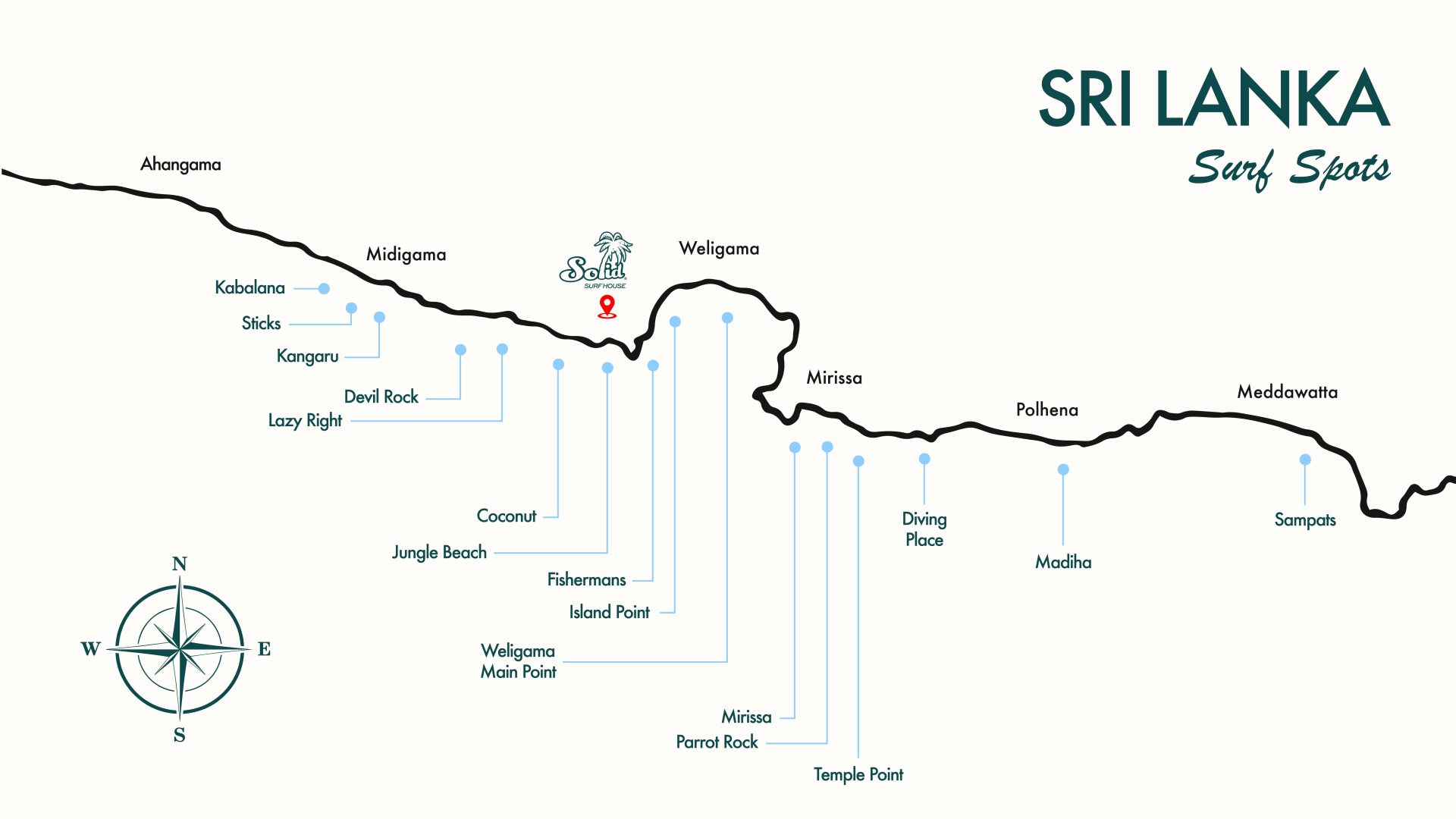
From this base, we guide surfers to multiple nearby breaks along the south coast, giving more variety than single-location surf camps.
Equipment Included
Full range of surfboards per level
Leashes and accessories
Optional rashguard
Beyond Surfing
Daily yoga sessions
Ice Bath
Surf Skate
Local + international meals
Social surf camp environment
All-inclusive Surfing Holiday from: 399,- Euro per week
Sri Lanka
TRAVEL INFO
Sri Lanka is an island nation located in the Indian Ocean, known for its picturesque beaches and tropical climate. It is also a surfer’s paradise, with plenty of surf spots for all levels of surfers. From beginner-friendly breaks to challenging waves for the pros, Sri Lanka has it all. If you are looking for an unforgettable surfing experience, then Sri Lanka should be on your bucket list. There are many surf camps located on the island that cater to surfers of all levels. These surf camps offer surf lessons, surfboard rentals, accommodation, and more, making it easy for you to focus on your surfing and enjoy your time in the water.
One of the best things about surfing in Sri Lanka is the warm water temperature, which makes it a great destination for year-round surfing. During the peak season from November to April, the southern coast of Sri Lanka experiences consistent swells that attract surfers from all over the world. With its warm water, consistent waves, and stunning scenery, it is a surfer’s paradise that should not be missed. Very well suited for Beginner L1 – L2 and Intermediate L3 to Advanced L4. The rain season also delivers overall good surf and sunny days.
Best Travel Time
Sri Lanka’s tropical climate is affected by the monsoon, which separates the island into two distinct climatic zones. The southwest region experiences heavy rainfall from May to September during the monsoon season, while the southeast region experiences rainy weather from October to January. The best time to visit Sri Lanka for surfing depends on which region you plan to visit. However, due to the island’s unique climate, you can expect an average of 330 sunny days per year. We recommend scheduling your surf trip during the winter to escape the colder winter conditions in Europe.
Air & Water Temperature
The southern region where surf camps are located experiences a consistent air temperature of around 30°C and a water temperature of about 28°C throughout the year. However, the central highlands can experience cooler weather. If you plan to travel to the highlands, be prepared for average temperatures of around 16°C and consider packing warmer clothing.


Surfing
Sri Lanka Surf Spots
Sri Lanka is a surfer’s paradise, with some of the best surf spots in the world. Whether you’re a beginner or a seasoned pro, there’s a wave for you in this tropical island nation.
The southern coast of Sri Lanka is home to some of the most popular surf spots in the country. Weligama Bay is known for its beginner-friendly waves, while Mirissa Beach offers more challenging breaks for experienced surfers. Further east, the town of Arugam Bay boasts some of the best waves in the country, and is a must-visit destination for any serious surfer.
Other notable surf spots in Sri Lanka include Hikkaduwa Beach, Unawatuna Beach, and the secluded beaches of the east coast. With warm water and consistent waves year-round, Sri Lanka is a top destination for surfers from around the world.
At our surf camp in Sri Lanka, we provide everything you need for an unforgettable surf vacation. Our experienced instructors will guide you through the fundamentals of surfing, while our comfortable accommodations and amenities will ensure that you can relax and recharge after a day in the water.
Whether you’re looking to improve your skills, or just enjoy some fun in the sun, our surf camp in Sri Lanka is the perfect destination for your next surf trip. Come join us and experience the beauty of Sri Lanka’s surf spots for yourself!
Flight
Looking for affordable flights to Colombo (CMB)? Check out Qatar and Emirates airlines for the best deals. Qatar even offers free transportation for surfboards, while Emirates allows a board bag of up to 2m and 23kg as a second piece of luggage. With average costs ranging from €550-650, flying to Sri Lanka has never been more budget-friendly. Most flights have a brief stopover in Dubai or Qatar, but direct flights from Germany and Switzerland are also available. If you need help finding a flight or navigating Sri Lanka’s visa requirements, our team is happy to assist you.
Entry
Typically, you can enter the country using a passport, including a temporary one, but not an identity card. Children also require a valid passport, and all documents should have a minimum validity of six months.


Do
- Indulge in the local cuisine - you'll be surprised at how delicious and affordable it is! The go-to meal is rice and curry with fish or chicken, but make sure to sample other mouth-watering dishes like roti (dumplings filled with various ingredients), fried rice (rice stir-fried with a variety of ingredients), string hoppers (thin rice flour noodles), and buriyani (spiced rice dish).
- A traditional weekly market takes place once a week in the immediate vicinity of our surf camps. Here you can experience a piece of authentic Sri Lanka, because only a few tourists come to this market. From fresh fruit and vegetables to fragrant teas and exotic spices, you will find everything your heart desires here.
- If you are planning to travel short distances, consider using a tuk-tuk as it is the most affordable and straightforward means of transportation. However, if you intend to travel to the mountains or cover long distances, the train would be the best option. It may be slow, but it is worth it for the picturesque views along the way. If you have not made a reservation, be prepared to compete for a window seat.
- Ensure you bring sufficient cash when traveling to smaller towns as there may be limited access to working ATMs.
Don’ts
- Be aware of the level of spiciness in Sri Lankan cuisine! It is considered one of the spiciest in the world, and consuming an excessive amount of spicy food as a challenge can result in an unpleasant experience for your taste buds. Nonetheless, the spices used in the food also help to preserve it for longer periods. It is advisable to stick to local dishes instead of continental ones to avoid potential digestive issues.
- The same applies to nature as to the waves - know your limits and don't just rush carelessly into the jungle. On average, 40-50 people are killed by elephants every year. Snakes, crocodiles and leopards are not necessarily tame, so it is essential to follow the rules of the locals on safaris or other excursions.
- Furthermore, it's recommended to refrain from engaging in elephant riding. It's a much better option to witness these majestic creatures in their natural habitat during a safari, rather than contributing to their exploitation and potential mistreatment.
- Sri Lanka is a country with a significant Buddhist population, and it's important to be respectful of their religious customs and practices. It's considered a serious offense to disrupt any religious ceremonies, particularly the morning and evening prayers. When visiting temples, dress appropriately by avoiding headgear, removing shoes, and covering your shoulders. Additionally, it's important to avoid taking photos with your back facing the Buddha. Buddhist monks have a revered position in society, and while they are friendly and helpful, touching them is not permitted.
Frequently Asked Questions (FAQ)
About Surf Camp Sri Lanka
The best time for surfing in Sri Lanka is from October to Mid-April on the southwest coast, and from May to September on the east coast. This time of year is suitable for Beginner – Intermediate and Advanced. The rain season is also a good time to come – more quiet in the water, less crowd still plenty of sun, with overal good waves.
No, most surf camps in Sri Lanka offer surfboard rentals as part of their packages. However, you are welcome to bring your own board if you prefer.
Yes, many surf camps in Sri Lanka cater to beginners and offer lessons with experienced instructors.
The cost of a surf camp in Sri Lanka varies depending on the location, length of stay, and level of accommodation. On average, a week-long surf camp can cost around $479 to $1000 USD.
Apart from your swimwear and surf gear, you should bring lightweight, comfortable clothing, sunscreen, insect repellent, and a reusable water bottle.
Yes, most surf camps in Sri Lanka provide accommodation and meals as part of their packages.
Yes, many surf camps in Sri Lanka offer additional activities such as yoga
Age restrictions vary depending on the surf camp. Some camps may have minimum age requirements for safety reasons.
Yes, surfing in Sri Lanka is generally safe. However, it is important to follow safety guidelines and be aware of currents, tides, and weather conditions.
Research different surf camps and read reviews from previous guests to find one that fits your needs and preferences. Consider factors such as location, level of accommodation, instructor experience, and activities offered.